How Much Do You Know About The Introduction Of Capacitive Touch Screen
Leave a message
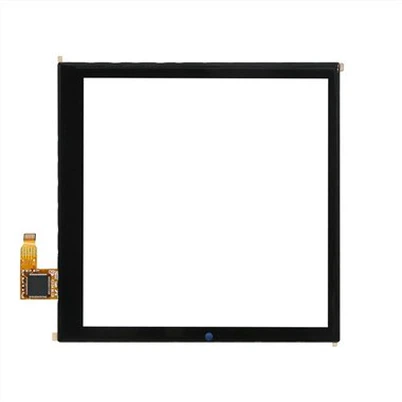
The capacitive touch screen technology uses the current induction of the human body to work. The capacitive touch screen is a four-layer composite glass screen. The inner surface and the interlayer of the glass screen are each coated with a layer of ITO. The outermost layer is a thin layer of silica glass protective layer. The interlayer ITO coating is used as the working surface, and the four corners are led out Four electrodes, the inner layer of ITO is a shielding layer to ensure a good working environment. When a finger touches the metal layer, due to the electric field of the human body, a coupling capacitor is formed between the user and the surface of the touch screen. For high-frequency current, the capacitor is a direct conductor, so the finger draws a small current from the contact point. This current flows from the electrodes on the four corners of the touch screen, and the current flowing through these four electrodes is proportional to the distance from the finger to the four corners. The controller calculates the position of the touch point by accurately calculating the ratio of these four currents. .
Principle overview
The capacitive touch screen is a transparent special metal conductive material attached to the glass surface. When a finger touches the metal layer, the capacitance of the contact will change, causing the frequency of the oscillator connected to it to change. By measuring the frequency change, the touch position can be determined to obtain information. Since the capacitance varies with temperature, humidity, or grounding conditions, its stability is poor and it tends to drift.
The multi-touch is to divide the screen into blocks, and set a group of mutual capacitance modules in each area to work independently, so the capacitive screen can independently detect the touch conditions of each area, and after processing, it is simply realized multi touch. Capacitive technology touch panel CTP (Capacity Touch Panel) uses the current induction of the human body to work. The capacitive screen is a four-layer composite glass screen. The inner surface and the interlayer of the glass screen are each coated with a layer of ITO (Nano Indium Tin Metal Oxide). The outermost layer is a protective layer of silica glass with a thickness of only 0.0015mm, with an interlayer ITO coating. As the working surface, four electrodes are drawn from the four corners, and the inner layer of ITO is the screen layer to ensure the working environment. When the user touches the capacitive screen, due to the electric field of the human body, the user's finger and the working surface form a coupling capacitor. Because the working surface is connected to a high-frequency signal, the finger absorbs a small current, which flows from the four corners of the screen. The current flowing through the four electrodes is theoretically proportional to the distance from the finger tip to the four corners. The controller calculates the position of the four current ratios accurately. It can reach 99% accuracy and has a response speed of less than 3ms.