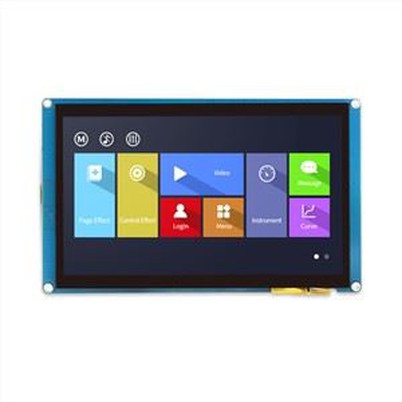
LCD Display Technology Industry Knowledge
Leave a message
In the optoelectronic display industry, liquid crystal display technology has long occupied a mainstream market position thanks to its mature and stable performance and high practical value. It is widely applied in consumer electronics, industrial equipment, intelligent terminals and many other scenarios, serving as one of the core foundational technologies of the modern display industry. Unlike self-luminous display technologies, such products adopt a passive light-emitting structure. They cannot emit light on their own, and rely on a built-in backlight module to deliver even light sources. Through the electro optic effect of liquid crystal molecules to control light transmission, combined with color filter components and polarizing structures, they can accurately restore colors and image layers to achieve high-definition visual presentation.
After long-term technical iteration, the manufacturing process of liquid crystal displays has become well-established with a reliable quality control system and strong mass production stability. It effectively avoids common issues such as screen flicker and color banding. Its greatest strengths lie in operational stability and durability. It supports long-hour nonstop operation with low wear on core display components and a long service life, fully meeting the demands of commercial deployment, industrial control, intelligent equipment matching and other long-running scenarios. Meanwhile, it features excellent power consumption control. It will not generate excessive heat during operation and stands out in energy saving, fitting the low-carbon trend of intelligent hardware.
In terms of image performance, liquid crystal display delivers accurate color reproduction and soft, delicate images with uniform screen performance. It reduces eye strain after prolonged viewing and brings notable eye-friendly benefits. Compared with emerging display technologies, it boasts a complete supply chain, controllable mass production cost and prominent cost performance, making it a preferred option for various mid-range display devices. Limited by its passive light-emitting structure, it still has inherent drawbacks. Its viewing angle and contrast ratio are moderate. Slight image lag may occur during fast dynamic scene switching, so it is not ideal for extreme gaming or high-end audio-visual scenarios that pursue top-tier image quality.
Benefiting from comprehensive performance advantages, liquid crystal displays cover a broad range of applications. They are widely equipped in consumer electronics, household smart devices, vehicle-mounted terminals, industrial control panels, medical monitoring equipment, art exhibition terminals and more. Whether for static image presentation indoors, frequent human-computer interaction, or information display in mild outdoor environments, it maintains stable operation to meet diverse and customized market requirements.
Competition in the display industry is intensifying with continuous emergence of new display technologies. Nevertheless, liquid crystal display still holds an irreplaceable market position due to solid technical accumulation, stable product performance and mature implementation adaptability. The industry keeps optimizing this technology by improving liquid crystal formulas, upgrading backlight structures and refining color calibration processes, so as to boost contrast, color saturation and response speed to make up for inherent weaknesses. In the future, with the growing demand for intelligent hardware, industrial intelligence and customized functions, customized liquid crystal display products tailored for segmented scenarios will continue to explore the market and deliver core application value.