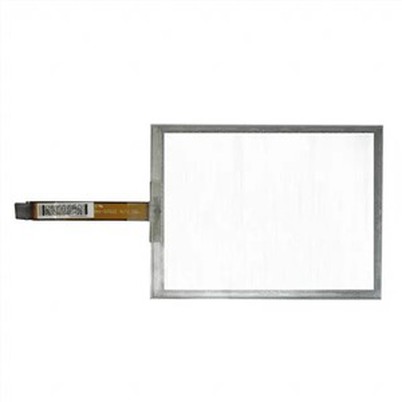
Touchscreens: A Practical Technology Changing Interaction Methods
Leave a message
A touchscreen is a convenient device that allows people to operate directly with their hands. Without the need for additional tools, a light touch on the surface enables input of commands, and it has now become integrated into all aspects of life. It breaks the traditional operating logic, making communication between people and devices more direct and natural.
Basic Working Principle: The core of a touchscreen is its ability to sense touch actions and transmit signals. When a finger touches the surface, it triggers a subtle reaction within the device. This reaction is quickly captured and converted into a command, allowing the device to perform the corresponding operation. The entire process is extremely fast, with almost no delay, as if the device can instantly "read" the finger's intention. It doesn't require complex mechanical structures; it relies entirely on an under-surface sensing system, making it both simple and reliable.
Common Types and Characteristics: The touchscreens we encounter daily mainly come in several different styles, each with its own advantages. Some are suitable for precise operation, such as drawing and writing, clearly capturing subtle finger movements with smooth, uninterrupted lines. Others prioritize durability, with a robust surface that can withstand frequent touches and daily wear and tear, commonly found in devices in public places. Still others have extremely fast response times, accurately recognizing even simultaneous touches of multiple points, suitable for gaming or multi-user interactive scenarios. While these types differ in their working methods, they all prioritize "easy operation" to meet the needs of various scenarios.
Wide Application Scenarios
The applications of touchscreens have far exceeded people's imaginations. In daily life, they are indispensable in terminals used for shopping payments, information devices used on public transportation, and ordering panels in restaurants. In the workplace, touchscreen operation improves efficiency and simplifies processes in office equipment and product demonstration terminals. In entertainment, mobile phones, tablets, and home entertainment devices make leisure time more enjoyable with their intuitive operation. Even in learning scenarios, dedicated learning devices use touchscreens for interactive teaching, making knowledge acquisition more vivid.
Usage, Maintenance, and Development Trends
When using touchscreens, keeping the surface clean is important to avoid oil and dust affecting sensitivity. Also, avoid touching them with sharp objects to prevent surface damage. During daily storage, avoid squeezing or contact with high temperatures and humid environments to extend their lifespan.
In the future, touchscreens will develop towards greater intelligence. It may become thinner, more flexible, and even able to conform to surfaces of different shapes; the sensors will be more precise, able to recognize the pressure of the press, bringing a richer operating experience; it may also integrate with more devices, enabling various tools in the home, on the go, and at work to have convenient touch interaction functions, further simplifying life and making the interaction between people and devices more seamless.