The Evolution of Touch Technology: From Precise Sensing to Intelligent Interaction
Leave a message
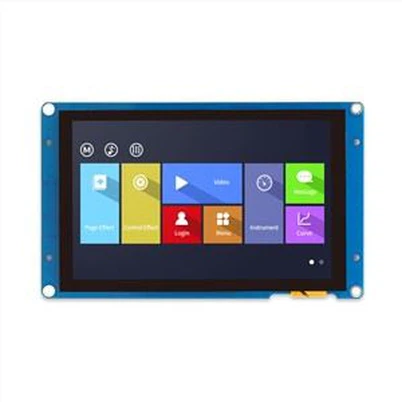
Capacitive touchscreens are currently the mainstream touch solution. Their core principle is to capture the human body's bioelectrical signals through a transparent conductive film on the glass surface. When a finger touches the screen, the capacitance value at the contact point changes, and the chip accurately locates the touch position by detecting this change. Compared to earlier resistive screens, it responds without requiring pressure, supporting multi-touch operations such as two-finger zooming and rotation. It also boasts higher light transmittance (usually over 90%) and faster response times (single-touch latency can be as low as 10 milliseconds). In the consumer electronics field, from smartphones and tablets to smart home control panels, it has become almost standard. In industrial settings, capacitive touchscreens with waterproof and scratch-resistant coatings can adapt to complex environments such as workshop control panels and self-service terminals, balancing durability and accuracy to cover a wide range of applications.
With the increasing demand for intelligence across various industries, touch technology has upgraded from a simple "input tool" to a "scenario-based interactive medium." In automotive cockpits, traditional physical buttons are gradually being replaced by integrated touch interfaces, allowing drivers to adjust air conditioning, navigation, or interact with the in-car system with a simple touch. Some high-end models even optimize touch sensitivity based on driving scenarios to prevent accidental operations. In the medical field, touch devices with antibacterial coatings allow doctors to access patient data during surgery without touching physical buttons, reducing the risk of cross-infection. In retail terminals, self-checkout machines use intuitive touch operations to complete scanning, payment, and receipt printing in one go, significantly improving checkout efficiency. These customized touchscreens not only adapt to the specific needs of different industries but also drive the upgrade of human-computer interaction from "function realization" to "experience optimization."
The future development of touch technology is moving towards "thinner, smarter, and more integrated" solutions. Flexible touch solutions have been applied to foldable smartphones and wearable devices, achieving stable touch functionality even after multiple folds through improvements in flexible substrate materials. In industrial control, high-protection-grade touch components can withstand extreme temperatures from -40℃ to 85℃, adapting to harsh working conditions. Simultaneously, touch technology is also being integrated with pressure sensing and AI algorithms-for example, enabling layered operations such as "light touch to select, heavy press to confirm" by recognizing pressure intensity, or identifying user identity through touch patterns to enhance device security. The implementation of these technological innovations relies on the iteration of core components. As a crucial part connecting the motherboard and the display panel, the touch panel has evolved from a simple signal transmission carrier to a smart interactive core integrating multiple technologies. It remains a key link connecting users and smart devices and an important foundation for driving digital transformation across various industries.