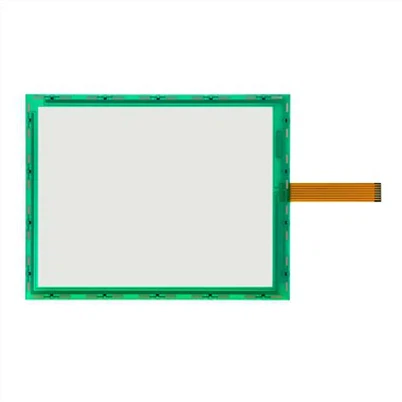
TFT Display Industry Knowledge
Leave a message
TFT Display, or thin film transistor liquid crystal display, is the mainstream liquid crystal display technology. It makes TFT arrays on the glass substrates on both sides of the liquid crystal layer, and accurately controls the state of liquid crystal molecules at each pixel to form an image.
When working, the liquid crystal molecules change their orientation under the influence of the electric field. The TFT array regulates the amount of current passing through the liquid crystal molecules according to the image signal voltage, changes its orientation, and controls the degree of light transmission or light blocking of the pixel. The backlight light becomes polarized light through the polarizer. When passing through the liquid crystal layer, the polarization direction changes according to the molecular orientation, and finally forms an image.
TFT Display has significant advantages. High resolution makes the picture clear and delicate, which can meet the needs of high-definition equipment; fast response time makes the dynamic picture smooth and reduces smear; wide viewing angle ensures consistent viewing effect at different angles; high contrast and brightness, present rich details and layering; rich color performance, can achieve wide color gamut display.
In terms of application, it covers a wide range of consumer electronics fields, such as smartphones, tablets, laptops and TVs. In industrial control, it provides intuitive display for human-machine interface; medical equipment uses it to accurately present image data to assist diagnosis; in automotive electronics, it is used for instrument panels, central control screens, etc. In addition, it can be seen everywhere in products such as smart watches.
In the future, TFT Display will develop towards higher resolution and refresh rate, bringing a clearer and smoother visual experience. Narrow borders and full-screen design will further expand the visible area. At the same time, the research and development of low-power technology continues to advance to extend the battery life of mobile devices and reduce energy consumption.