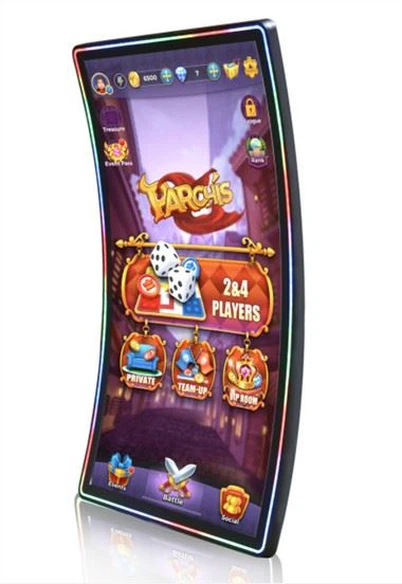
Curved Display Industry Knowledge
Leave a message
Curved display is a segmented display product developed based on optical ergonomics. Its core design concept fits the spherical viewing range of human eyes. By bending the substrate to adjust the imaging distance difference across the screen, it optimizes visual experience during long-hour viewing. At present, such products serve three major markets: consumer electronics, vehicle equipment and commercial advertising terminals.
In the industry, the letter "R" stands for radius of curvature, measured in millimeters. A smaller number means a steeper bend. The 1000R specification creates a strong wrapping sense, widely adopted by 34-inch and wider ultra-wide gaming monitors for close-distance use. The 1500R variant balances image accuracy and immersive effect, making it a universal choice for office and entertainment scenes. The mild 1800R bend works well for living-room large screens and central control consoles, as it minimizes visual distortion when multiple viewers watch at different angles.
Substrate material sets the limit of bending degree. Flexible OLED uses polyimide base material to support sharp bending, targeting high-end car cabins and premium audio-visual appliances.
Traditional liquid crystal products rely on cold-bent hard glass for shaping. Though their bend range is limited, they carry lower manufacturing costs and dominate mainstream desktop peripheral markets.
The visual advantage of curved screens lies in unified optical distance. Flat panels create varying distances between the human eye and screen edges, which forces eye muscles to adjust constantly and triggers fatigue. Curved surfaces keep every pixel at nearly equal sight distance, reducing strain for users who stare at screens all day, such as designers and financial analysts. For commercial digital signage installed in shopping malls, this feature also attracts passers-by with wrapped visual layers that flat panels cannot deliver.
Yet the product has inherent limitations. Viewing angle tolerance drops when spectators sit far from the central axis. People watching from screen sides will notice color deviation and picture deformation. For large-scale public display occasions requiring multi-angle sharing, straight panels remain a more practical pick. In addition, special packaging and transportation molds are required for bent panels to avoid irreversible creases during delivery, raising logistics expenses compared with flat counterparts.
Application scenarios continue to expand with material iteration. Apart from game screens and vehicle central control panels, medical equipment and simulation training equipment have begun to adopt such panels. Simulators for driving and aviation leverage the wrapped vision to strengthen scene realism and improve training authenticity.
Manufacturers are optimizing production techniques to cut overall costs. New cold-bending processes shorten processing cycles and lower reject rates. Meanwhile, adjustable bend structures are under research, allowing users to switch curvature modes according to different usage needs. As downstream terminal demand diversifies, the product will carve out unique market positioning alongside flat display solutions, focusing on scenarios that prioritize immersive viewing experience.