Which Is Better, Capacitive Touch Screen Or Resistive Touch Screen?
Leave a message
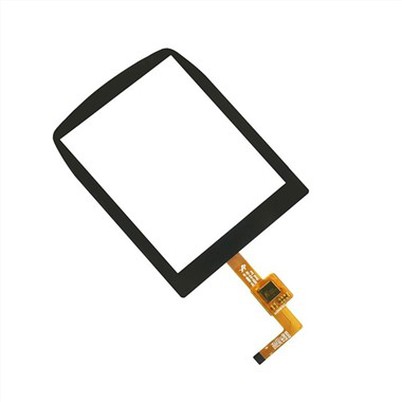
Touch screens can be divided into capacitive touch screens and resistive touch screens. The surface of the capacitive touch screen is coated with a transparent conductive layer of ITO, and the voltage is connected to the four corners. The small DC dispersion is on the surface of the screen to form a uniform electric field. The operation is interesting, supports multi-touch, and does not accidentally touch. Because it can react accordingly only when it senses the current of the human body. The resistive touch screen is composed of a display screen and a resistive film screen. The resistive film screen is divided into two layers. One layer is based on glass and coated with a transparent conductive layer; outside the base layer is a plastic layer that also has a conductive layer. Whenever the screen is pressed or touched, the conductive layers will touch each other to form a contact signal and realize the operation. Of the two touch screens, the resistive touch screen can only judge one control point when working, and it cannot make a correct judgment if there is more than one. It is not suitable for multi-functional mobile phones and tablets, but only suitable for simple actions such as clicking and dragging. Judgment. The capacitive touch screen has high durability, dustproof, waterproof and wear-resistant characteristics, and its multi-touch function can decompose the user's touch action and complete the judgment of complex actions, so it is very ideal for use. Touch screens for mobile phones and tablets. The quality of the touch screen needs to be verified through testing. Reliability testing must be carried out in production. The main test items include high and low temperature storage, thermal shock storage, dot test, scribing test, surface hardness, surface static pressure test, packaging vibration, Packaging drop, steel ball impact test, etc. There is a greater demand for current transmission in the touch screen test. The high-current shrapnel micro-needle module can be used for connection and conduction. One is that it can transmit up to 50A and maintain a stable connection; the other is that it will not be connected. The device causes punctures and has an average service life of more than 20w times; third, it can cope with complex test environments, constantly pinning and not pinning, which can effectively improve test efficiency.