What is the difference between LCD and LCM?
Leave a message
1. Definition
LCD (Liquid Crystal Display): Liquid crystal display is a flat panel display device. Its main working principle is to use the physical properties of liquid crystal to control the arrangement of liquid crystal molecules through the action of electric field, thereby changing the light transmission and blocking conditions to display different images and text information. Liquid crystal itself does not emit light, and needs a backlight to provide light source. Common backlight sources include cold cathode fluorescent lamps (CCFL) and light-emitting diodes (LED). For example, many of our common calculator displays and early computer monitors are LCDs.
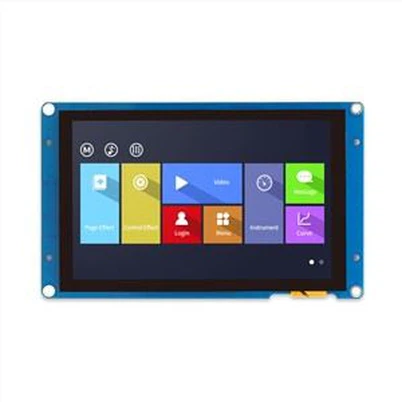
LCM (Liquid Crystal Module): Liquid crystal display module is a component that assembles liquid crystal display (LCD), connectors, peripheral circuits such as control and drive, PCB circuit boards, backlight sources, structural parts, etc. In short, LCM is an integrated product. It takes LCD as the core and adds other necessary components to enable it to be directly used in various electronic devices for display functions. For example, a mobile phone screen is a typical LCM, which not only includes the LCD screen itself, but also includes driver chips, cables, and backlight sources that allow the screen to work properly.
2. Composition
LCD: It is mainly composed of liquid crystal layer, polarizer, glass substrate, etc. The liquid crystal layer is the core part, which is used to control the propagation of light; the polarizer is used to filter the light in a specific direction; the glass substrate plays the role of supporting and protecting the liquid crystal layer. In LCD with backlight, the backlight is also an important component, providing light behind the liquid crystal display.
LCM: In addition to the basic structure of LCD, it also has a driver chip (IC) to control and drive the display of liquid crystal, such as adjusting the contrast, brightness, color and other parameters of the display; there are interfaces for connecting the main circuit board, such as FPC (flexible printed circuit board) interface, etc., to facilitate signal transmission; there are backlight and its driving circuit to ensure that the screen has enough brightness for display; there are also structural parts such as the shell to protect the internal components and make the entire module easy to install in electronic equipment.
3. Functional characteristics
LCD: Focuses on the basic realization of the display function, that is, to display images through the modulation of light by liquid crystal molecules. Its performance is mainly reflected in some basic display parameters, such as resolution (the number of pixels on the screen, which determines the clarity of the image), contrast (the ratio of brightness between bright and dark parts, which affects the layering of the image), response time (the speed at which the state of liquid crystal molecules changes, which is important for dynamic picture display), etc. However, a single LCD still needs an external circuit to drive it in actual applications to work properly.
LCM: It has more complete functions and is a display unit that can be directly used in electronic devices. It has a higher degree of integration. In addition to good display functions, it also considers compatibility and ease of use with external devices. For example, LCM can easily communicate with a microcontroller (MCU) or other main control chip through an interface to receive display data and control instructions. Moreover, LCM usually has a variety of sizes and interface types to meet the design requirements of different electronic devices, such as mobile phones, tablets, smart watches and other devices with different requirements for screens.
4. Application scenarios
LCD: It is used in some occasions where the cost requirements are very strict and the integration requirements of the display module are not high. For example, some simple electronic devices, such as small electronic thermometers and electronic clocks, can design simple drive circuits to control LCD displays, and only need basic display functions to display numbers or simple icons.
LCM: Widely used in various complex electronic devices, especially consumer electronics. Because these products usually require compact design, efficient production and easy-to-install components. For example, in smartphones, LCM can quickly connect to the motherboard of the mobile phone and control the screen to display various complex graphical interfaces, videos and other contents through the chip of the mobile phone. In the field of industrial control, LCM is also used in human-machine interface (HMI) devices, which makes it convenient for operators to intuitively view the status and operating parameters of the equipment.