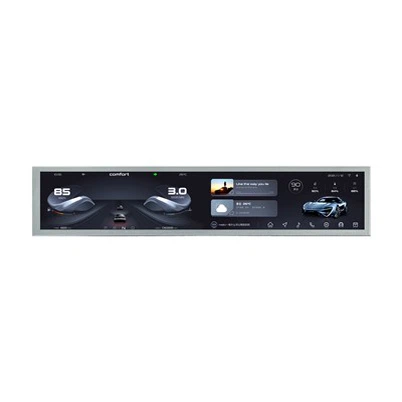
The difference between liquid crystal display screens and liquid crystal display monitors
Leave a message
The difference between liquid crystal display screens and liquid crystal display monitors
1. Different definitions:
liquid crystal display screen:
Refers to the display panel part of the liquid crystal display. It is the core component of liquid crystal display technology and is responsible for displaying image and video information.
liquid crystal display (monitor):
It refers to the entire display device, including the liquid crystal display screen, circuit board, casing, power supply and all other components. It is a complete electronic product.
2. Different functional scopes:
Liquid crystal display screen:
Its main function is to display images. It does not contain circuits for processing image or video signals by itself and requires an external device to provide a signal source.
liquid crystal display (monitor):
In addition to having the display function of a liquid crystal display screen, it also includes functions such as signal processing and power management, and can directly receive and process video and image information from various signal sources.
3. Different usage scenarios:
liquid crystal display screen:
Usually appears as a component of other electronic products, such as laptops, tablets, televisions, vending machines, smart robots, smart home appliances, etc., which integrate liquid crystal displays inside to achieve display functions.
liquid crystal display (monitor):
It is an independent electronic product that can be directly connected to computers, game consoles and other devices for use, providing visual display services for users.
To sum up, the liquid crystal display screen is an important component of the liquid crystal display (monitor), but there are obvious differences between the two in terms of definition, functional scope and application scenarios.