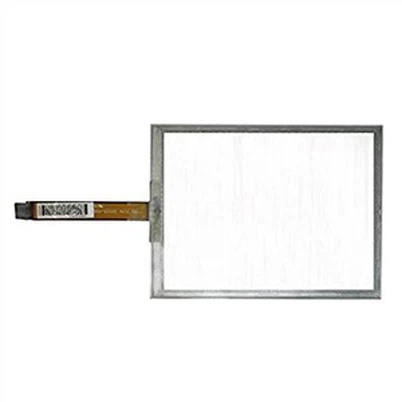
The core secret of industrial touch displays: Why are LCD panels the top choice?
Leave a message
The core component of industrial touch displays is the liquid crystal panel, and the LCD (liquid crystal display) panel is currently the mainstream choice. Although LED (light-emitting Diode) panels are also very common in the market, the industrial field prefers to use LCD panels. There are multiple reasons behind this, including technological maturity, cost-effectiveness and applicability, etc.
High reliability
LCD panel technology has developed for several decades and the process is very mature. Its working principle is to display images by controlling the passage of light through liquid crystal molecules. This technology is stable and reliable. The industrial environment has extremely high requirements for the stability of equipment. LCD panels have been verified over a long period of time and can operate stably under various complex conditions. In contrast, although LED panels have higher brightness, their long-term stability in industrial scenarios has not been fully verified.
Outstanding cost performance
The procurement of industrial equipment usually requires consideration of cost-effectiveness. The production cost of LCD panels is relatively low, especially on large-sized screens, where the price advantage of LCD is more obvious. For factories or workshops that need to deploy a large number of touch displays, choosing LCD panels can significantly reduce overall costs. Although LED panels have superior performance in some aspects, their high price makes it difficult for them to be popularized in the industrial field.
Low maintenance cost
Industrial equipment usually needs to operate for a long time, so the lifespan of the screen is an important consideration factor. The backlight lifespan of LCD panels can usually reach over 50,000 hours, or even longer. This means that under normal usage conditions, LCD panels can work stably for many years without the need for frequent replacement. Although LED panels also have a relatively long lifespan, their energy consumption and heat generation issues in high-brightness mode may affect their overall service life.
Better compatibility
Industrial touch displays need to perfectly combine touch functions with display functions. LCD panels perform better in compatibility with touch technology, especially in the application of resistive or capacitive touch screens. LCD panels can provide more stable signal transmission and more accurate touch response. However, in some cases, LED panels may encounter problems such as signal interference or insensitive touch control.
It has a wide range of applicable scenarios
The industrial environment is complex and diverse, and LCD panels have stronger adaptability. It can operate in a wide temperature range, such as from minus 30 degrees to plus 70 degrees, meeting the demands of most industrial scenarios. In addition, the brightness and contrast of the LCD panel can be adjusted according to specific needs, and it can display clearly even in strong light environments. Although LED panels have higher brightness, their performance in extreme temperatures or high humidity environments may not be as stable as that of LCD panels.
Why not an LED panel?
Although LED panels have certain advantages in terms of brightness, color performance and energy consumption, there are still some limitations in their application in the industrial field. Firstly, the cost of LED panels is relatively high, especially on large-sized screens, where the price can be several times that of LCD panels. Secondly, the stability of LED panels in extreme environments has not been fully verified, and industrial scenarios have extremely high requirements for the reliability of equipment. Finally, the energy consumption and heat generation issues of LED panels may affect the long-term operation of the equipment in high-brightness mode.
Summary
LCD panels are widely used in industrial touch displays mainly because of their mature technology, low cost, strong adaptability, long service life and good compatibility with touch technology. Although LED panels have superior performance in some aspects, their high cost and stability issues make it difficult for them to replace LCD panels in the industrial field. For industrial scenarios, LCD panels are undoubtedly a more economical and reliable choice.