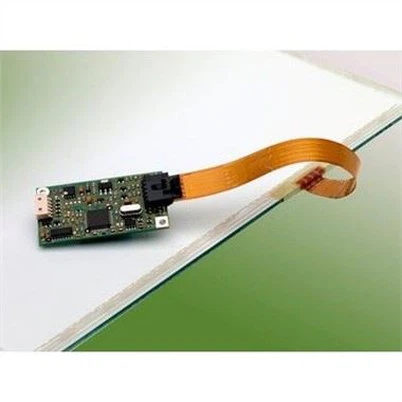
Technological Iteration Drives Scenario Innovation: The LCD Touchscreen Industry Enters a New Phase of High-Quality Development
Leave a message
As 2026 begins, the LCD touchscreen industry is undergoing a profound transformation-shifting from a focus on scale expansion to one of technological leadership. As a core medium for human-machine interaction, this mature technology leverages its advantages of controllable costs and stable performance to continuously generate growth momentum. Driven by dual forces-technological breakthroughs and the expansion of application scenarios-it has emerged as a vital cornerstone of smart terminals and the digital economy.
Currently, technological innovation in LCD touchscreens is centered on the deep integration of display and touch functionalities. In-Cell technology, which embeds the touch-sensing layer directly within the liquid crystal display unit, boasts a light transmittance of 94.2% and superior structural strength. Consequently, its penetration rate in the large-screen sector (exceeding 65 inches) has reached 64%, while its accuracy error has been reduced by 40% compared to traditional add-on solutions. The On-Cell solution, conversely, excels in manufacturing flexibility, making it well-suited for the rapid product iteration cycles characteristic of small-to-medium-sized devices. Through optimizations in driver ICs and upgrades to optical algorithms, leading enterprises have successfully reduced touch response latency to under 8ms; gaming-grade products, in particular, have achieved an ultra-fast response time of just 1ms, thereby completely resolving the issues of motion blur and lag that have long plagued large-screen interactions. Furthermore, the application of Quantum Dot-enhanced LCDs and MiniLED backlight technologies has enabled products to achieve 99% DCI-P3 color gamut coverage and a peak brightness of 2,000 nits in scenarios such as medical imaging and commercial displays, striking a perfect balance between professional display precision and interactive fluidity.
In terms of market landscape, industry concentration continues to rise, with domestic leaders solidifying their dominant positions. The top five manufacturers-including BOE and TCL CSOT-collectively command nearly 70% of the global market share. Production from high-generation lines continues to ramp up, with the global capacity share of Gen 8.6 lines rising to 26%. By 2025, China's LCD touchscreen shipments are projected to reach 1.28 billion units, with the total market size surpassing 320 billion RMB. Although growth in the traditional consumer electronics sector has slowed, emerging fields-such as automotive displays, industrial control systems, and medical equipment-have emerged as new growth engines, collectively achieving a growth rate of 9.7%. Among these, the automotive display sector stands out as a particularly bright spot; its market size is expected to exceed 28 billion RMB in 2026-a year-on-year increase of 28.6%-as the trend toward multi-screen interaction within "smart cockpits" drives a substantial increase in both the total display area per vehicle and the demand for interactive capabilities. The boundaries of application scenarios are constantly expanding. In the realm of public services, self-service banking terminals, community access control systems, and medical registration kiosks leverage touchscreens to streamline workflows, while anti-peeping and anti-interference features ensure information security. In industrial control environments, wide-temperature-range and highly durable touch panels-optimized for glove-wearing operation-have emerged as the central interactive interface for smart manufacturing. Within the smart home sector, touchscreens serve as central control hubs, enabling one-touch linkage of devices ranging from lighting to security systems. Furthermore, breakthroughs in flexible LCD touch technology have enabled innovative applications such as smart windows and automotive Head-Up Displays (HUDs), driving the evolution of interaction from two-dimensional planes to three-dimensional spaces.
Looking ahead, the LCD touchscreen industry will continue to evolve, centering on the core pillars of "high precision, low latency, and broad adaptability." As the domestic production rate of upstream components-such as glass substrates and conductive materials-continues to rise, the cost structure of the entire industry chain will undergo further optimization. Driven by the dual forces of technological innovation and market demand, this classic technology is experiencing a renaissance; by delivering smarter and more efficient interactive experiences, it empowers the digital transformation of industries across the spectrum, providing a robust foundation for both digital living and industrial upgrading.