How to choose the Industrial monitor?
Leave a message
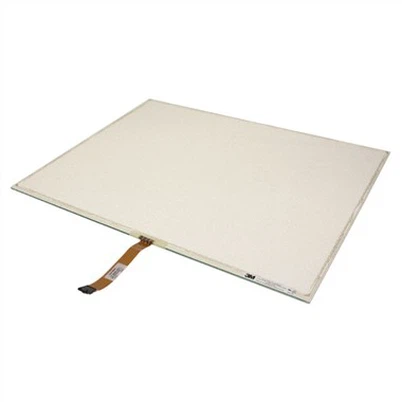
In the wave of industrial automation, touch industrial LCD display have become the "smart center" of production lines. Whether it is mechanical control, data monitoring, or human-computer interaction, an industrial touch screen with stable performance and smooth operation can greatly improve efficiency. However, facing the various products on the market, how to avoid "stepping on thunder"? Today's industrial touch screen purchase guide will help you accurately identify core needs and choose the right equipment to get twice the result with half the effort!
1. Durability: The first threshold for industrial scenarios
The industrial environment is much harsher than the office environment: oil, dust, vibration, high temperature... the "delicate" physique of ordinary commercial screens can't stand it at all. Be sure to identify three major standards when purchasing:
Protection level: IP65 is the basic level (dustproof and waterproof), special scenes such as chemicals and food require IP67 or above;
Seismic and pressure-resistant: the thickness of the screen tempered glass is ≥4mm, and the whole machine must pass vibration and impact test certification;
Wide temperature operation: temperature adaptability from -20℃ to 70℃, to cope with extremely cold workshops or outdoor exposure scenes.
2. Touch technology: Don't let the operation lag behind Touch sensitivity directly affects the operating experience, and different technologies need to be matched for different scenarios:
Industrial-grade capacitive screen: supports 10-point touch and operation with gloves, suitable for high-precision scenarios such as mechanical control;
Infrared screen: resistant to strong light interference, stable response in dusty environment, commonly used in mining and metallurgical industries;
Five-wire resistive screen: low cost, resistant to liquid splashing, suitable for humid environments such as food processing.
Tips: Choose a model with an anti-false touch algorithm to avoid misoperation caused by equipment vibration!
3. Display performance: Clear viewing is the most important thing
Strong light and reflection problems are frequent in industrial sites, so the screen parameters must be "hardcore":
Brightness: above 1000cd/m², visible in sunlight;
Contrast ratio: from 1500:1, presenting clear chart details;
Wide viewing angle: 178° full viewing angle, multi-angle monitoring without color cast.
4. Expansion and compatibility: reject "information islands"
A true industrial screen should be able to "integrate into the system" rather than "fight alone":
Interface richness: standard RS485, CAN bus, Ethernet port, compatible with PLC, sensors and other equipment;
System openness: supports Windows/Linux/Android multiple systems, adapts to customized development needs;
Protocol compatibility: full coverage of industrial protocols such as Modbus and Profinet, breaking through data barriers.