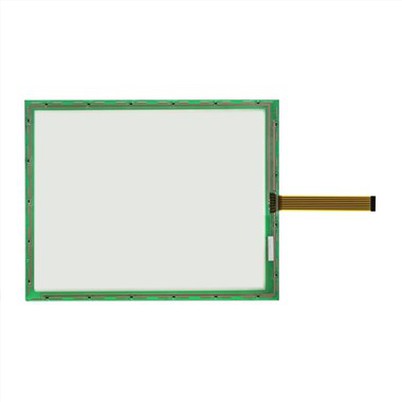
Capacitive touch screen technology
Leave a message
Capacitive touch screen technology has higher clarity than resistive technology, capacitive touch screens consist of curved or flat glass substrates which have a transparent metal oxide coating. A small amount of voltage is applied at all corners of the overlay resulting in a uniform electric field. A bare finger draws current from each corner of the electric field, leading to a voltage drop that is measured to determine the touch location.
Advantages:
• Capacitive technology has superior efficiency, as almost 90% percent of the light from the screen can be transmitted. This makes it better than resistive technology.
• Capacitive is also the only technology unaffected by surface contaminants such as dust, grease, moisture, since the glass and bezel that mounts it to the monitor can be sealed. Thus, it is the first choice for use in any application which doesn’t touching with gloves, and can be used extensively in public access information kiosks, industrial automation, medical, gaming, banking, POS, etc.
Disadvantages:
• Capacitive touch screens only respond to finger contact. Scratches in the coatings can cause spots on the screens; hence a gloved finger, pen, stylus, or hard object will not work. Thus, it is inappropriate for use in many applications, including medical and food preparation.
• The technology was originally created for small screens, and hence will not scale to larger screens easily, also requiring periodic recalibration.
Resistive Technology : Analog 4-wire Resistive, Analog 5-Wire Resistive, Analog 7-wire Resistive, Analog 8-wire Resistive, Features of resistive technology
Capacitive Technology: Surface Capacitive touch technology, Projected Capacitive touch technology